

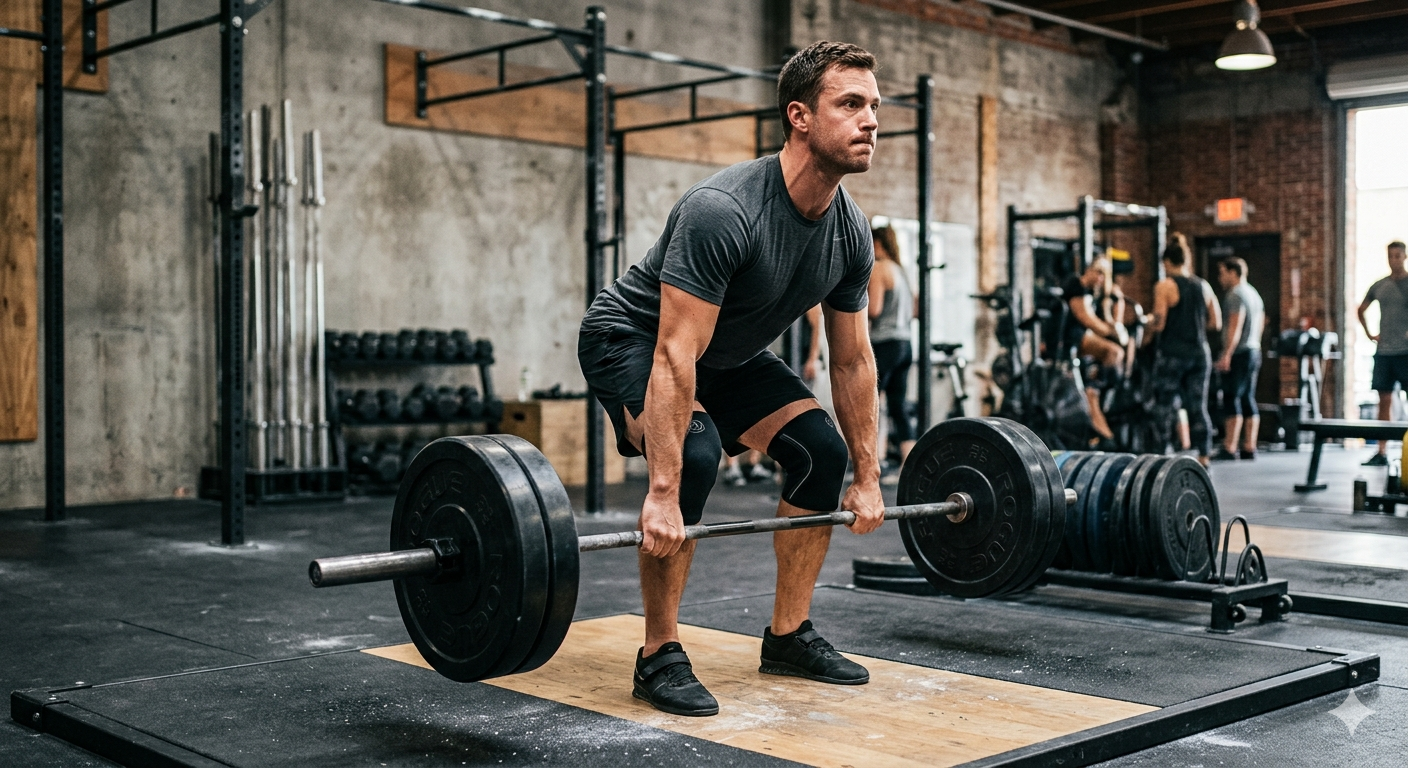
Deadlift form guide: Master the Ultimate Full-Body Exercise
The deadlift is often hailed as the king of all exercises. It is a fundamental movement that recruits multiple muscle groups simultaneously, making it incredibly efficient for building raw power. However, to reap the rewards without risking injury, following a precise deadlift form guide is paramount.
1. Perfecting the Starting Position
The setup is the most critical phase. Stand with your feet hip-width apart and the barbell positioned over the mid-foot. When you reach down to grab the bar, your shins should be vertical or slightly angled, and your grip should be just outside your legs. A proper setup ensures a shorter, more efficient bar path.
2. Engaging the Lats and Core
Before the bar even leaves the floor, you must create tension. Imagine squeezing oranges under your armpits to engage your latissimus dorsi. Simultaneously, take a deep breath into your belly and brace your core. This “bracing” creates internal pressure that protects your spine during the heavy lift.
3. The Pull: Pushing the Floor Away
A common mistake is thinking of the deadlift as a “pulling” movement with the arms. Instead, think of it as “pushing the floor away” with your legs. Maintain a neutral spine and drive through your heels. The bar should travel in a straight vertical line, keeping as close to your shins as possible.
4. The Lockout and Hip Hinge
At the top of the movement, stand tall by squeezing your glutes. Avoid leaning back excessively, as this puts unnecessary stress on the lumbar spine. To lower the bar, initiate the movement by unhinging your hips first, then bending your knees once the bar passes them.
5. Common Mistakes to Avoid
- Rounding the Back: This is the most dangerous error. Always keep a flat or neutral back.
- Bar Path: If the bar swings away from your body, it increases the leverage against your lower back.
- Hips Rising Too Fast: Ensure your hips and shoulders rise at the same rate to maintain leverage.